
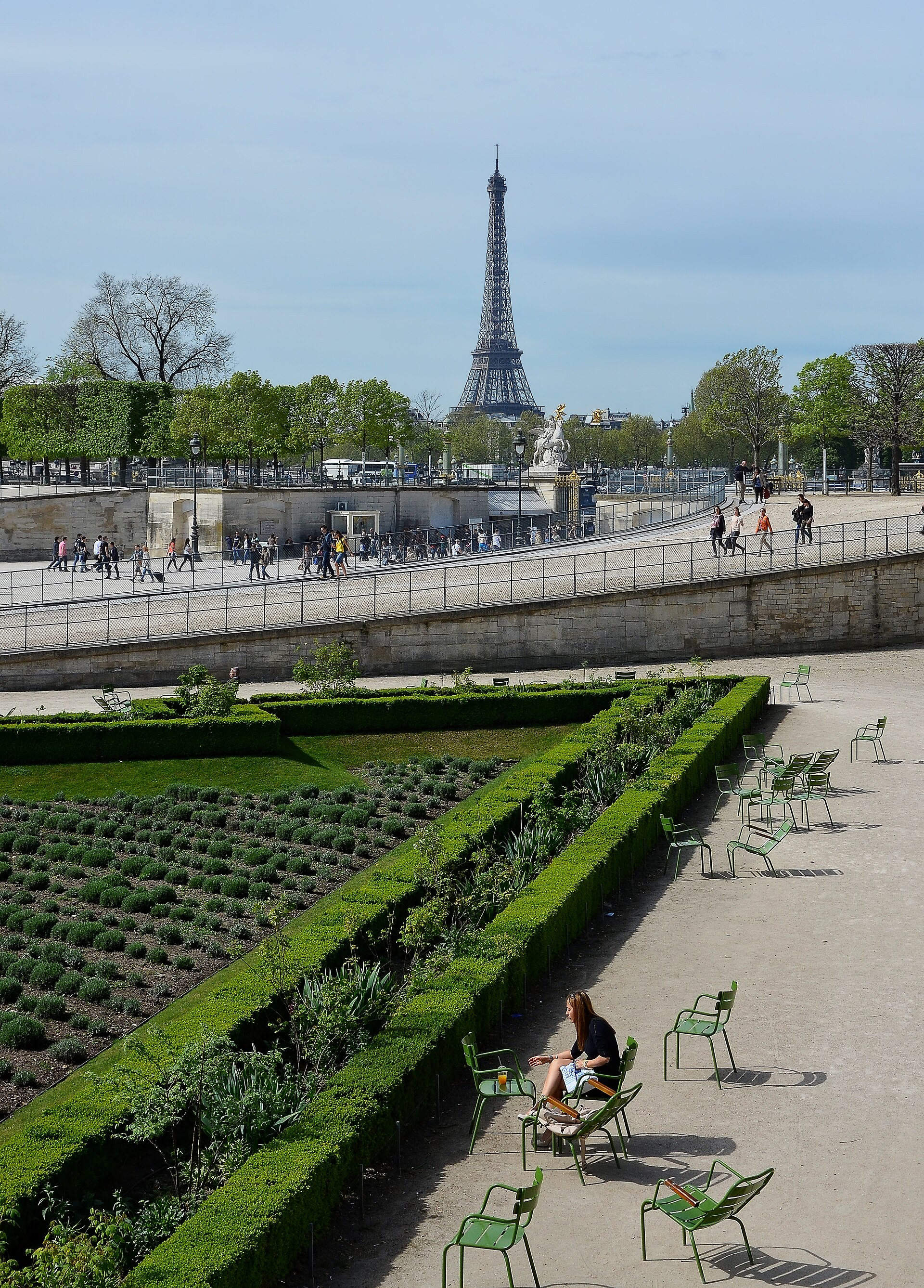
Jardin des Tuileries
- park
- Price: Free
- Opening hours: 07:00 - 21:00 (seasonal)
Book a guided tour of Paris
Skip the line and see Paris with a local guide.
History
Catherine de' Medici commissioned the original Tuileries Palace and its garden in 1564, choosing a site on the Right Bank just outside the medieval city walls that took its name, tuileries, from the tile kilns that had previously stood there. Successive monarchs expanded and refined the grounds over the following century, but it was André Le Nôtre — the landscape architect who would later design the gardens of Versailles — who gave the Tuileries their definitive form in 1664, laying out geometric parterres, long axial avenues and a central alley aligned toward the setting sun.
The palace itself served as a royal and later imperial residence, home to French kings and to Napoleon, until it burned down during the upheaval of the 1871 Paris Commune. Unlike most of the damage inflicted on Paris that year, the ruins were deliberately never rebuilt, and the empty space where the palace once stood was folded into the garden, opening up the long, uninterrupted sightline that today stretches from the Louvre to Place de la Concorde and beyond.
Did you know?
Le Nôtre's central axis was so precisely aligned that it later determined the direction of one of the world's most famous avenues: the great vista he cut through the garden toward the setting sun was extended, decades later, into what became the Champs-Élysées. Stand at the garden's western gate and you're looking down a sightline first drawn on paper in the 17th century.
More than a hundred sculptures are scattered among the garden's chestnut and lime tree allées, including bronzes by Auguste Rodin and Aristide Maillol, and since the 1990s the Tuileries have also hosted a rotating open-air display of modern and contemporary art. Two round ponds, popular with model-boat enthusiasts and sunbathers alike, anchor the garden's classical layout at either end.
Good to know
The Jardin des Tuileries is free to enter and open daily, with seasonal hours that generally run from early morning until around 9pm in summer and earlier in winter. Its location makes it one of the most convenient green spaces in Paris to fold into a day of sightseeing, since it links the Louvre directly to Place de la Concorde along a flat, shaded, and pram- and wheelchair-friendly path.
Green metal chairs scattered throughout the garden are free to use and make a perfect spot to rest beside the ponds. The terrace along the Seine offers some of the best unobstructed views in the city, so it's worth the short detour even if you're only passing through on your way between the Louvre and the Musée de l'Orangerie at the garden's western edge.