
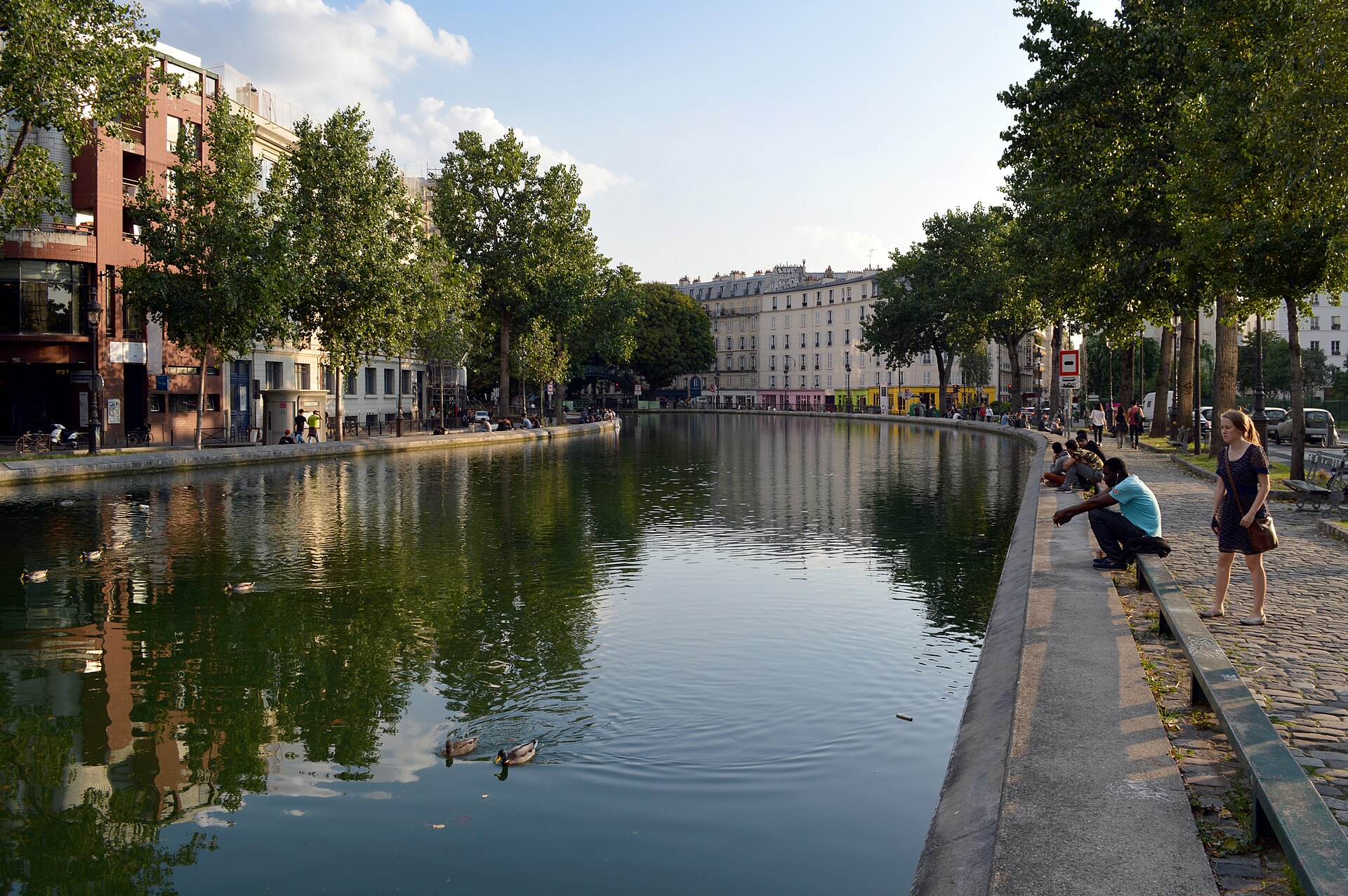
Canal Saint-Martin
- old-town
- Price: Free
- Opening hours: Always open (canal banks)
History
Napoleon ordered the canal built in 1802, not for charm but for public health: repeated outbreaks of cholera and dysentery had convinced authorities that Paris urgently needed a cleaner source of drinking water than the polluted Seine. The project took over two decades to finish, opening fully in 1825, and used nine locks and two swing bridges to manage a fall of about 25 metres over its 4.5-kilometre course from the Bassin de la Villette down to the Seine near Bastille.
For much of the 20th century it was a working industrial waterway, and by the 1970s city planners very nearly filled it in to build a motorway — a plan scrapped only after sustained opposition from local residents. That near-miss set the stage for the canal's quiet reinvention over the following decades into one of the most loved residential and leisure spots in the city.
Did you know?
For roughly two kilometres near Place de la Bastille the canal vanishes underground, flowing in a covered tunnel beneath the wide Boulevard Richard-Lenoir before re-emerging further north — a detail most Parisians walking overhead never think about.
The canal owes much of its romantic reputation to cinema. The 1938 film "Hôtel du Nord," shot partly on its banks, gave it a lasting aura of everyday Parisian drama, and in 2001 "Amélie" revived that mood for a new generation, including the now-famous scene of its heroine skimming stones across the water — a scene fans still try to reenact today.
Good to know
The canal banks are free and open all the time, and on warm weekends they fill with locals picnicking on the cobbled quays, cycling along the water, or simply watching barges work slowly through the locks. Bringing your own food and a blanket is very much the done thing.
If you'd rather see it from the water, canal boat cruises run the locks themselves, a fun way to watch the lock-keepers in action. Come evening, the quays around République and further north turn into one of the liveliest bar and café scenes in Paris, especially in the warmer months.