
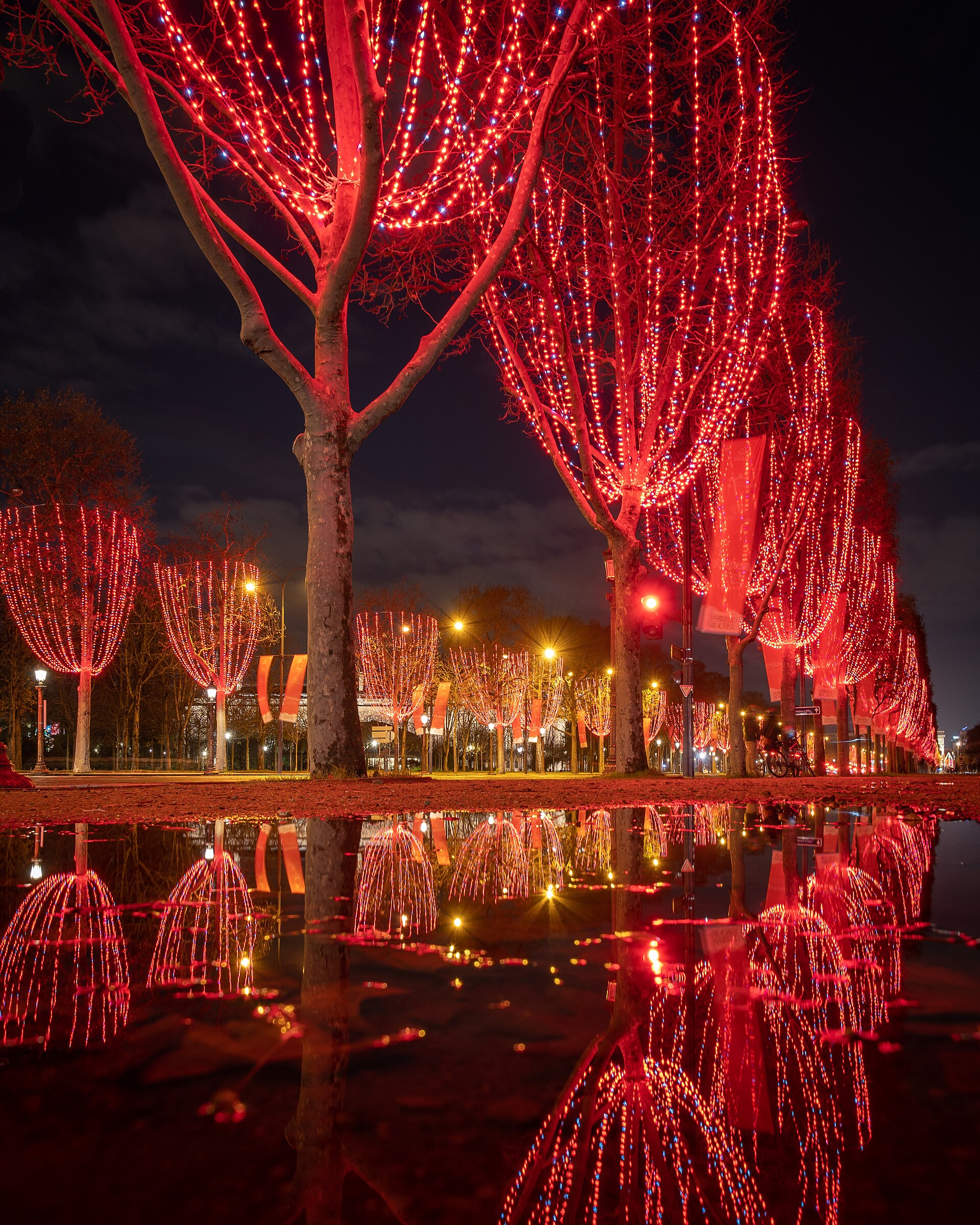
Avenue des Champs-Élysées
- piazza
- Price: Free
- Opening hours: Always open (avenue)
Book a guided tour of Paris
Skip the line and see Paris with a local guide.
History
The avenue began in 1667, when André Le Nôtre — the landscape architect behind the gardens of Versailles — extended a tree-lined promenade out from the Tuileries gardens toward open country. It took the following two centuries to become the avenue we know today, gradually lengthened, paved and lined with grand townhouses as it reached toward the Arc de Triomphe, itself only completed in 1836. Its name comes from the "Elysian Fields" of Greek mythology, the paradise reserved for heroes — a suitably grand label for a street built to impress.
As it took shape, the avenue became the ceremonial spine of the French capital, the setting for the annual Bastille Day military parade, the finish line of the Tour de France, and state processions and celebrations that have used it since the 19th century. Few streets anywhere carry that combination of solemn ceremony and everyday spectacle in quite the same way.
Did you know?
The avenue has two very different characters. Near Place de la Concorde it is still parkland and formal gardens, much as it looked in Le Nôtre's day, while the upper stretch climbing toward the arch filled over the 20th century with flagship stores, luxury boutiques, car showrooms and cinemas. Parisians even coined a phrase for wandering it with no particular purpose, "faire les Champs," treating a walk up the avenue as an activity in itself.
Twin rows of plane trees and pavements built wide enough for strolling rather than rushing give the avenue a theatrical, unhurried feel, and the slight, steady incline toward the Arc de Triomphe was no accident — it was designed to draw the eye upward toward the monument, making the approach feel grander with every step. The effect has made it one of the most photographed streets on Earth.
Good to know
Walking the avenue costs nothing and it never closes, though cafés and restaurants directly on the Champs-Élysées charge some of the highest prices in Paris for fairly ordinary food. Stepping onto the side streets just off the avenue, around Rue Marbeuf or Rue de Ponthieu, usually gets you a better meal for a fraction of the price.
The gentle slope toward the Arc de Triomphe makes for striking photos looking in either direction, especially early in the morning before the crowds and traffic build up. Avoid visiting on Bastille Day (14 July) or New Year's Eve unless crowds are part of the plan — the avenue becomes one of the most crowded strips of pavement in France on both occasions.