
Père Lachaise Cemetery
- historic
- Price: Free
- Opening hours: 08:00 - 18:00 (seasonal)
History
Napoleon's administration opened the cemetery in 1804 on a hillside then well outside Paris, on land that had once belonged to Père François de la Chaise, confessor to Louis XIV. Parisians initially found it too far from the city and too unfashionable to be buried in, and the cemetery struggled to attract plots in its first years.
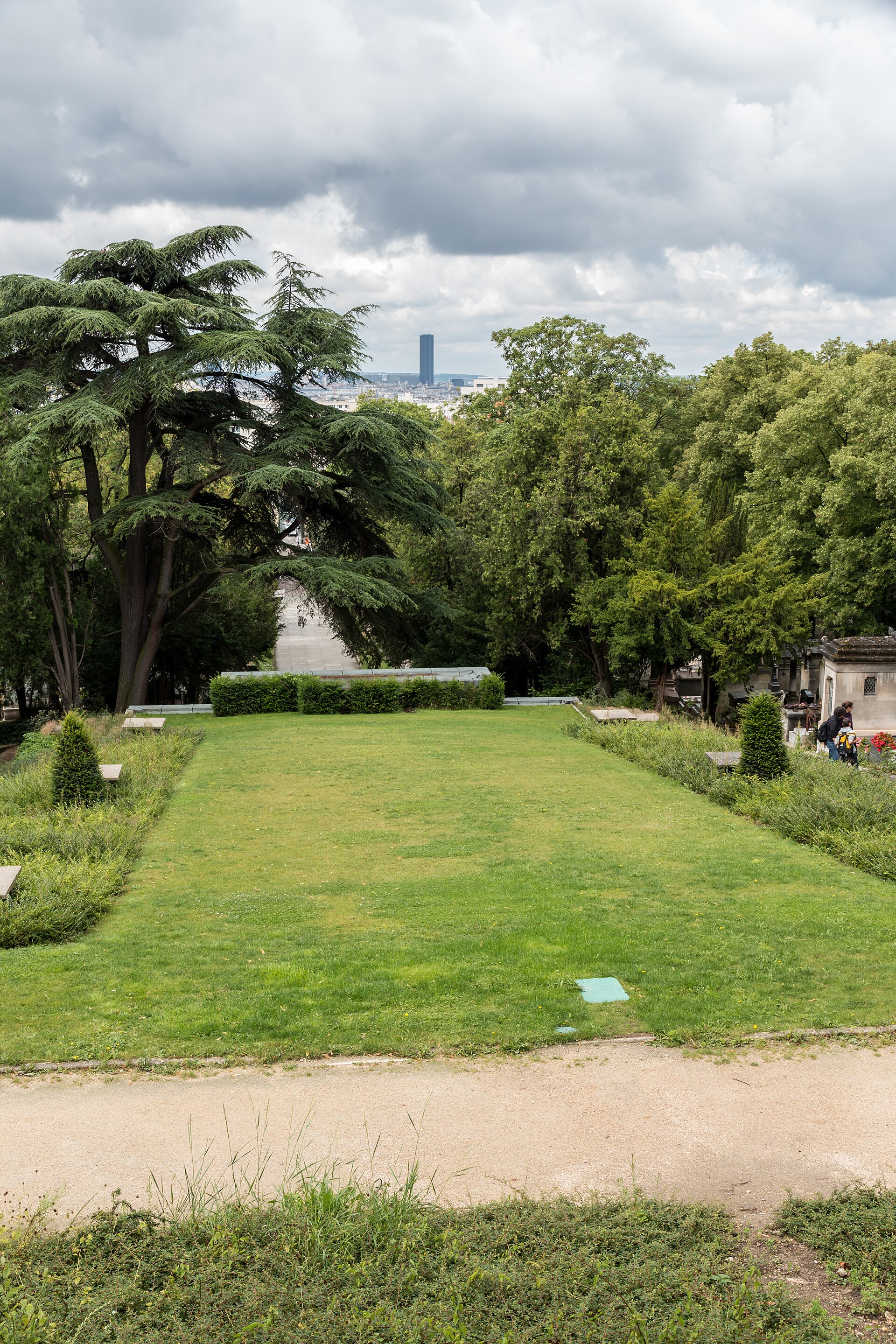
Cemetery managers solved the problem with a marketing masterstroke: the highly publicised reburial here of the playwright Molière and of the medieval lovers Héloïse and Abélard, whose romantic legend drew crowds and, soon after, Parisians eager to rest in such illustrious company. Demand quickly outstripped space, the cemetery expanded again and again over the following decades, and its winding cobbled paths and dense tree cover were landscaped in the English style rather than laid out in a rigid grid, giving it the feel of a park as much as a graveyard.
Did you know?
Père Lachaise now holds roughly one million burials across 44 hectares, and its elaborate tombs and family chapels amount to an open-air museum of two centuries of French funerary sculpture. Part of its history is somber: the 1871 Communards' Wall, in the cemetery's southeast corner, marks the spot where the last fighters of the Paris Commune were executed and buried after the uprising was crushed, and it remains a site of remembrance today.
Most visitors, though, come looking for particular graves: Frédéric Chopin, Oscar Wilde — whose tomb was so covered in lipstick kisses from admirers that it now sits behind a protective glass screen — Édith Piaf, Molière, Marcel Proust, and Jim Morrison, whose modest grave remains one of the most visited sites in the entire cemetery decades after his death.
Good to know
Entry is free, but the cemetery's layout is genuinely maze-like — winding paths, no grid, and thousands of near-identical monuments — so pick up a map at one of the entrance gates before you start; without one, finding a specific grave by chance is close to impossible.
Give yourself at least an hour and a half, ideally closer to two, to see more than a handful of graves and take in the atmosphere rather than rushing between highlights. Père Lachaise is still an active cemetery, so quiet, respectful behaviour is expected throughout, and opening hours shift with the seasons, so it's worth checking before you go.