
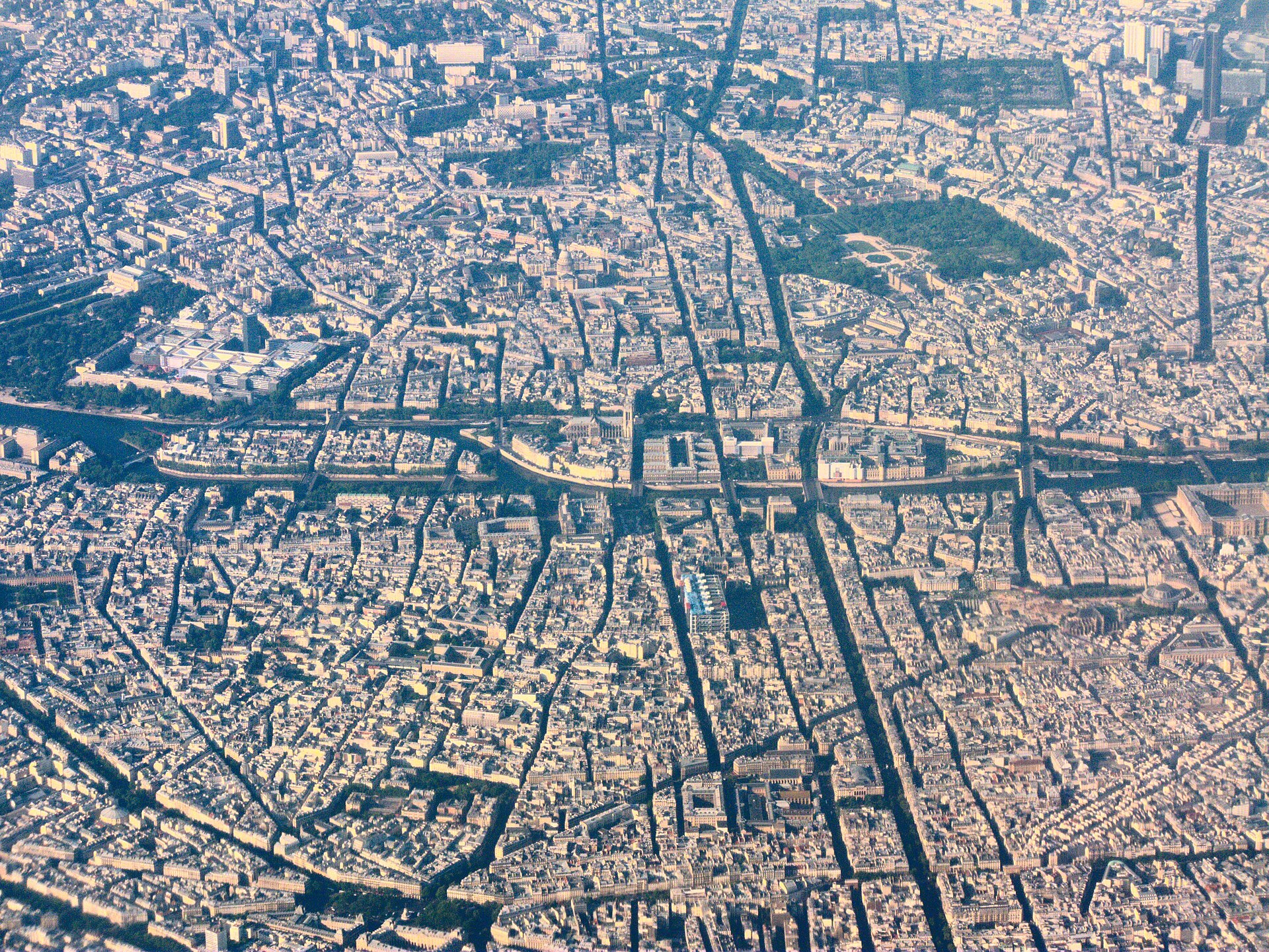
Île de la Cité
- old-town
- Price: Free
- Opening hours: Always open (island)
Book a guided tour of Paris
Skip the line and see Paris with a local guide.
History
Long before Paris existed, a Celtic tribe called the Parisii chose this boat-shaped island as a natural crossing point on the Seine, settling here sometime before the 3rd century BC and giving the future capital both its site and its name. After conquering Gaul, Roman legions recognised the same strategic value and fortified the island, laying the groundwork for the city that would grow around it on both riverbanks.
Through the medieval period the island became the undisputed seat of French royal and religious power. The Capetian kings built their palace here, later rebuilt as the Conciergerie and the jewel-box chapel of Sainte-Chapelle, while the bishopric raised Notre-Dame on the island's eastern tip. That dense medieval fabric survived for centuries until Baron Haussmann's sweeping 19th-century renovation of Paris hit the island harder than almost anywhere else in the city, demolishing a crowded quarter of some 25,000 residents to make way for the wide streets, the Hôtel-Dieu hospital and the Prefecture of Police that still dominate its centre today.
Did you know?
Despite its name, which translates as "new bridge," the Pont Neuf at the island's western tip is actually the oldest bridge still standing across the Seine, completed in 1607 under Henri IV. Unlike earlier Paris bridges, it was built without houses lining its sides, giving pedestrians of the time an unprecedented open view of the river — a novelty that made it an instant sensation.
Just behind that same bridge lies Place Dauphine, a quiet triangular square Henri IV laid out that same year, 1607. Even today, steps from the crowds gathered around Notre-Dame, it keeps a village-like calm that feels a world away from the rest of the island. Near the eastern end, a flower and bird market held on this spot since 1808 still brings a burst of colour outside the Conciergerie.
Good to know
Île de la Cité is free to visit and, as an open public island, effectively always accessible on foot. Its small size is part of its appeal: Notre-Dame, Sainte-Chapelle and the Conciergerie all stand within a few minutes' walk of one another, making it easy to combine several major sights into a single unhurried visit.
Come early in the morning or in the late afternoon to enjoy Place Dauphine and the riverside quays without the crowds that build up around Notre-Dame by midday. The island is well served by metro stations on both its northern and southern bridges, and its position in the middle of the Seine makes it a natural starting point for exploring both the Right and Left Banks on foot.