
Le Marais
- old-town
- Price: Free
- Opening hours: Always open (neighbourhood)
Book a guided tour of Paris
Skip the line and see Paris with a local guide.
History
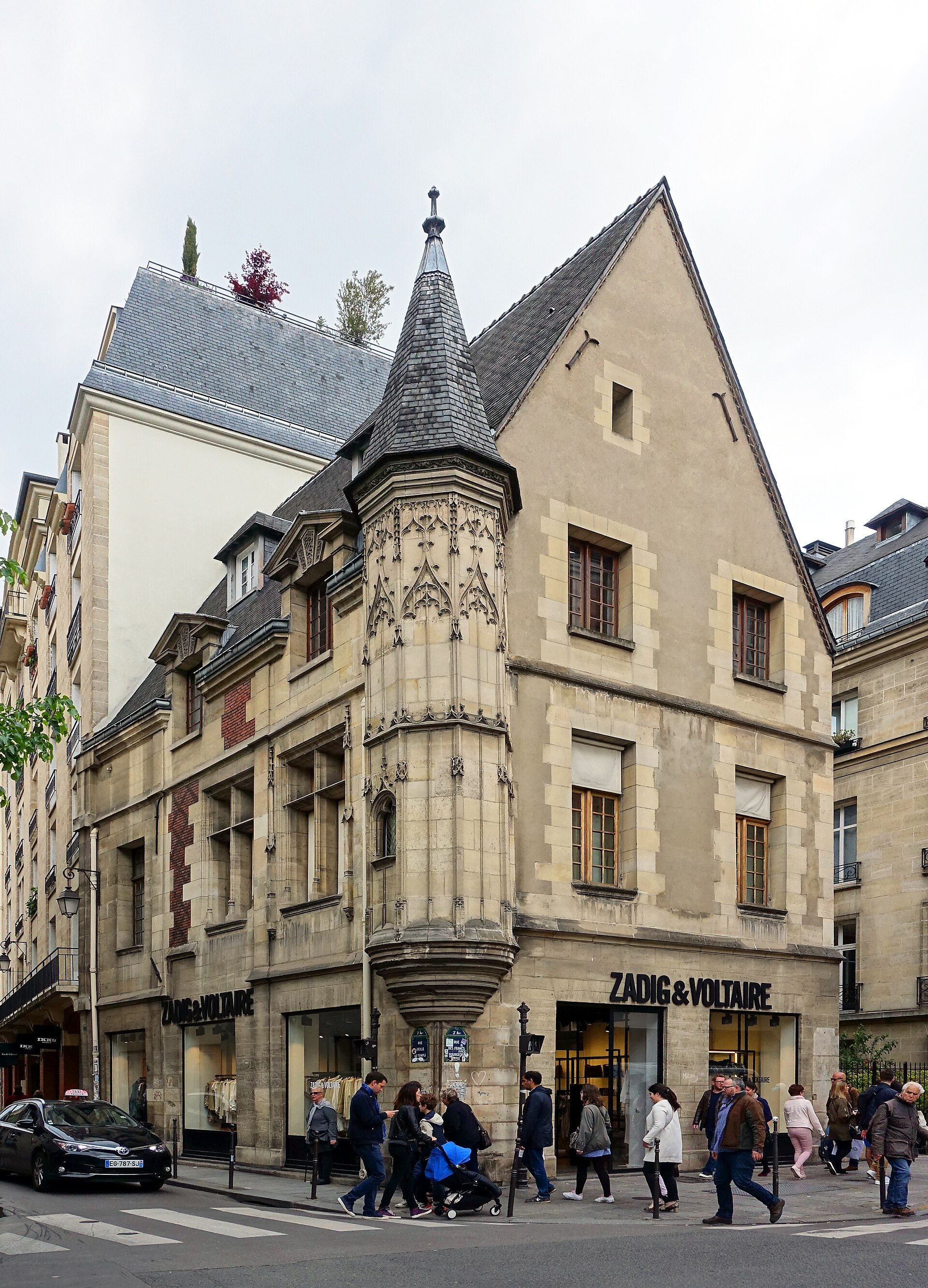
The name Marais simply means "the marsh," a reminder of the low-lying, waterlogged ground that monks began draining and cultivating here in the 13th century, long before the area was absorbed into the growing medieval city. Its fortunes changed dramatically in the early 1600s, when King Henri IV built the arcaded Place des Vosges nearby, drawing waves of nobility who filled the surrounding streets with grand hôtels particuliers, private mansions that still stand today and now house museums such as the Musée Picasso and the Musée Carnavalet.
That aristocratic moment was brief: once the royal court moved to Versailles, the nobility largely abandoned the Marais, and the neighbourhood slid into industrial and working-class use for the best part of two centuries. Paradoxically, that long period of neglect is exactly what saved the district, since the money never materialised to tear down and modernise its historic buildings the way it did in so much of the rest of Paris.
Did you know?
From the late 19th century, Jewish immigrants — first from Eastern Europe, later from North Africa — settled around rue des Rosiers, and the small quarter they built, known as the Pletzl, remains a centre of Parisian Jewish life today, its bakeries and falafel counters drawing queues at lunchtime. Its narrow medieval streets, having escaped the wholesale demolition that reshaped so much of the rest of the city under Haussmann, still follow much the same layout they did centuries ago.
Since the 1980s, the Marais has also become the heart of Paris's LGBTQ+ community, centred on rue Sainte-Croix-de-la-Bretonnerie, where bars, bookshops and cafés give the neighbourhood some of its liveliest evenings. The result is a district that layers Jewish heritage, LGBTQ+ culture and centuries of aristocratic and working-class history within the space of a few walkable blocks.
Good to know
Le Marais is free to explore and, as a neighbourhood rather than a single site, is always open — though individual shops, museums and cafés keep their own hours, and many close on Mondays. It rewards unhurried wandering on foot far more than a checklist visit to any single address.
Expect a dense mix of independent design boutiques, art galleries, kosher bakeries and some of the city's best-preserved medieval and Renaissance buildings packed into a small area, so budget a half-day rather than a quick stop. Weekend afternoons are lively but crowded; a weekday morning gives a quieter look at the same streets.