
Musée d'Orsay
- art-museum
- Price: €16
- Opening hours: Tue-Sun 09:30-18:00, closed Mon
History
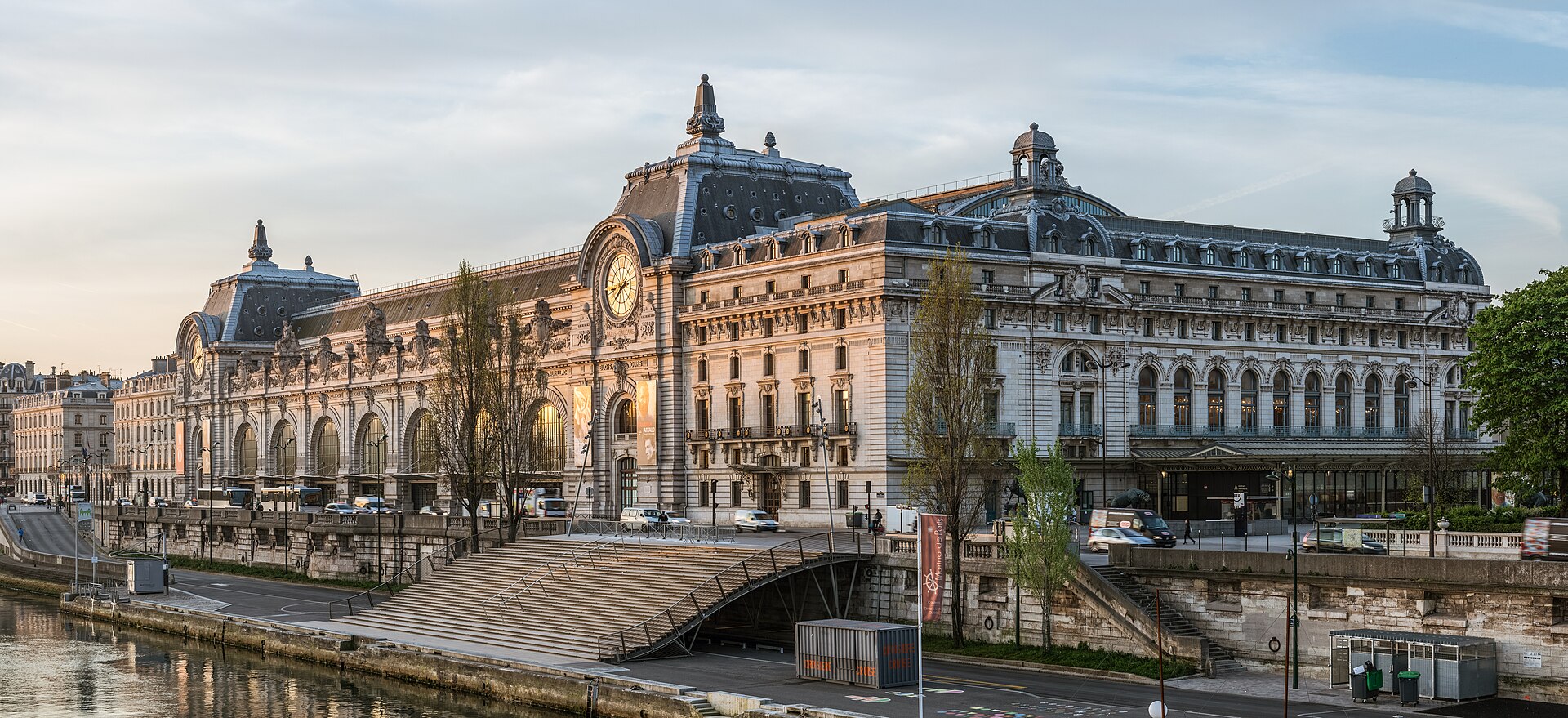
The building opened in 1900 as the Gare d'Orsay, a steel-framed railway terminus dressed in ornate stone to blend in with its grand neighbours along the Seine. It was built for that year's World's Fair and equipped with then-revolutionary electric trains, at a time when most stations still ran on steam.
Within a few decades its platforms proved too short for the longer trains of the mid-20th century, and the station slid into a long decline that included a stint as a film set and even an auction house before it faced demolition outright. It was saved at the last moment and converted into a museum by architect Gae Aulenti, who transformed the vast glass-roofed hall into galleries while preserving its soaring ironwork and the giant station clocks that still watch over the collection. The Musée d'Orsay opened in 1986.
Did you know?
The collection is deliberately positioned as a bridge, picking up where the Louvre's older collections leave off and running until the Centre Pompidou's modern art takes over — works made between 1848 and 1914, the exact decades that produced Impressionism and Post-Impressionism.
Entire rooms are devoted to a single artist's obsessions: Monet's water lilies, Degas's dancers caught mid-movement, Van Gogh's unflinching self-portraits, Renoir's sunlit garden parties. One of the most photographed spots in the building isn't a painting at all, but the café tucked behind one of the station's original oversized clock faces, with the Seine and the Tuileries visible through the glass.
Good to know
The museum is closed on Mondays, and because it's considerably more compact and focused than the Louvre, it's often the better choice for visitors mainly interested in Impressionist and Post-Impressionist painting rather than an encyclopaedic survey of art history.
Make time to see the giant clock up close, either from the café behind it or from the fifth-floor terrace nearby — the view over the Seine through the glass numerals is one of the best in the museum.